Independent research project
The foundry for
operational intelligence.
OpenFoundry is my approach to ontology-based enterprise AI, built as a working platform rather than a paper. It gives an agent like Apollo-1 a model of the operation it can query, a schema that constrains what it may conclude, and an audit record it cannot edit afterwards.
This is an independent research project. I build it to test whether the architecture holds and to show it to people working the same problems.
What is
OpenFoundry?
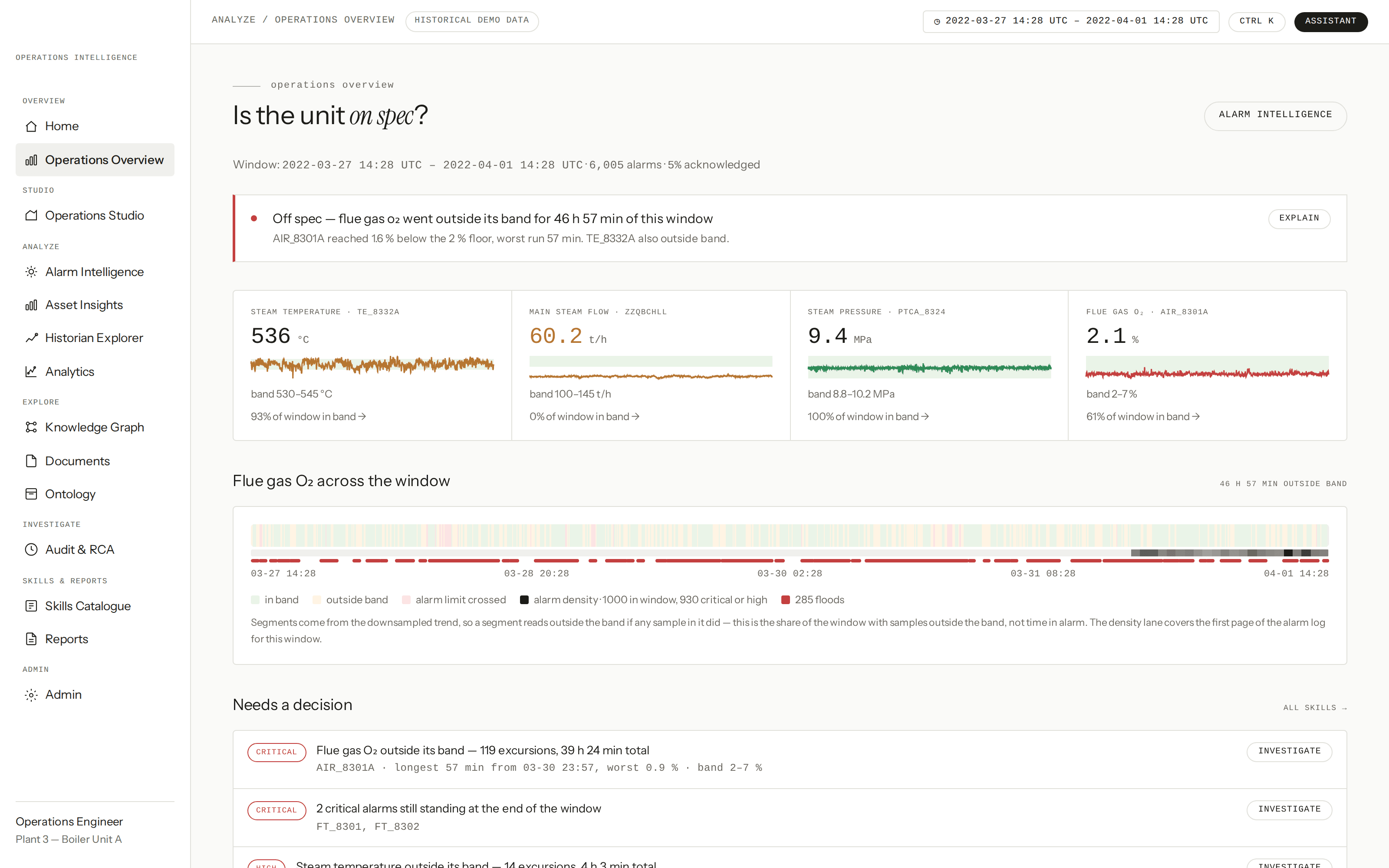
A platform for building governed, ontology-grounded AI agents on real operational context. It takes fragmented plant and enterprise data — historians, alarms, process knowledge, documents — and structures it into a semantic layer that agents can reason over safely, with every answer traceable back to its source. The architecture is the applied form of the knowledge-graph research: five layers, each one a constraint on what the layer above is allowed to conclude.
The ontology layer
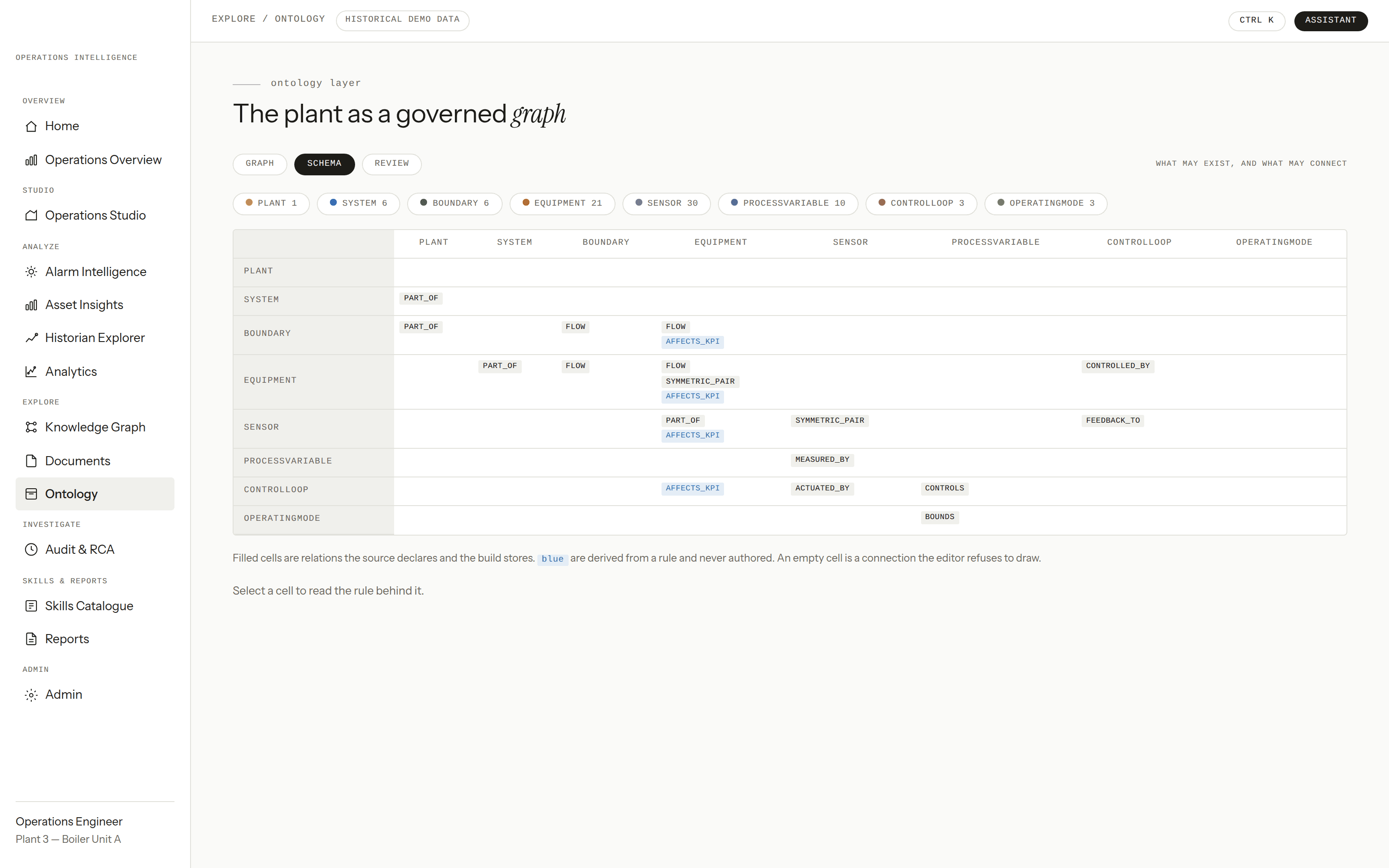
The ontology says what kinds of thing exist in the plant (pumps, streams, control loops, procedures) and which may be connected to which. The editor enforces it: each cell in the relation matrix is a connection it will either allow or refuse to draw. Derived relations are computed from rules instead of entered by hand.
An agent can't use a relationship the ontology doesn't allow, which is why its answers can be defended.
Private deployment
It runs on the owner's infrastructure and no data leaves it. The owner chooses the models and sets the rules.
Open standards
The knowledge model is stored in OWL and RDF and queried with SPARQL, so it stays readable without OpenFoundry.
Explainable
Every output points to the context it came from, so any decision it supported can be checked afterwards.
Governance built in
Access control, audit logs and approval steps are part of the core design.
Grounded on
operational reality.
OpenFoundry agents don't answer from memory. They query the systems that already run the operation — and cite exactly what they found.
Historian & time-series
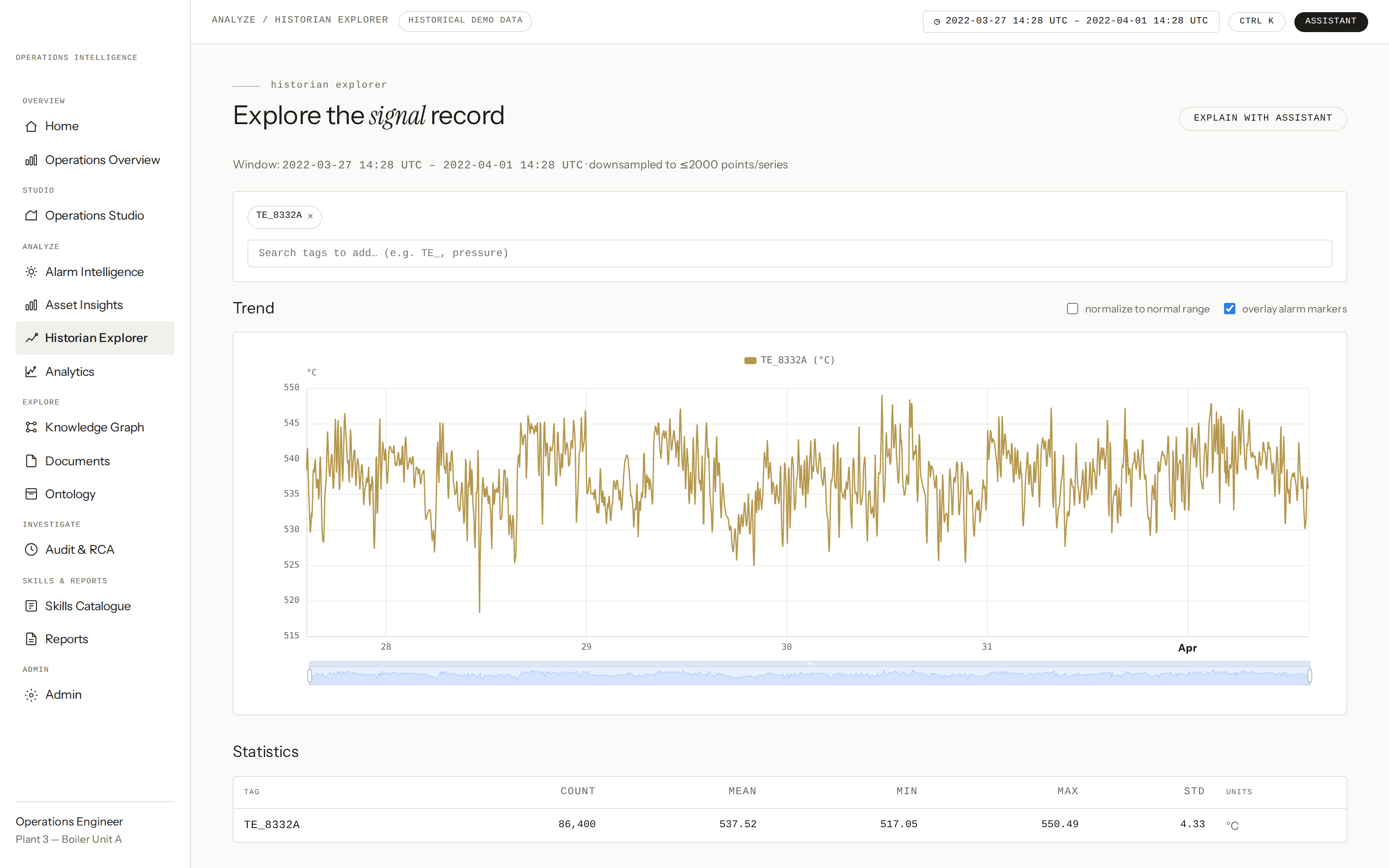
Sensor trends, statistics and normal ranges with alarms overlaid, searchable in plain language instead of tag codes.
Operations Studio
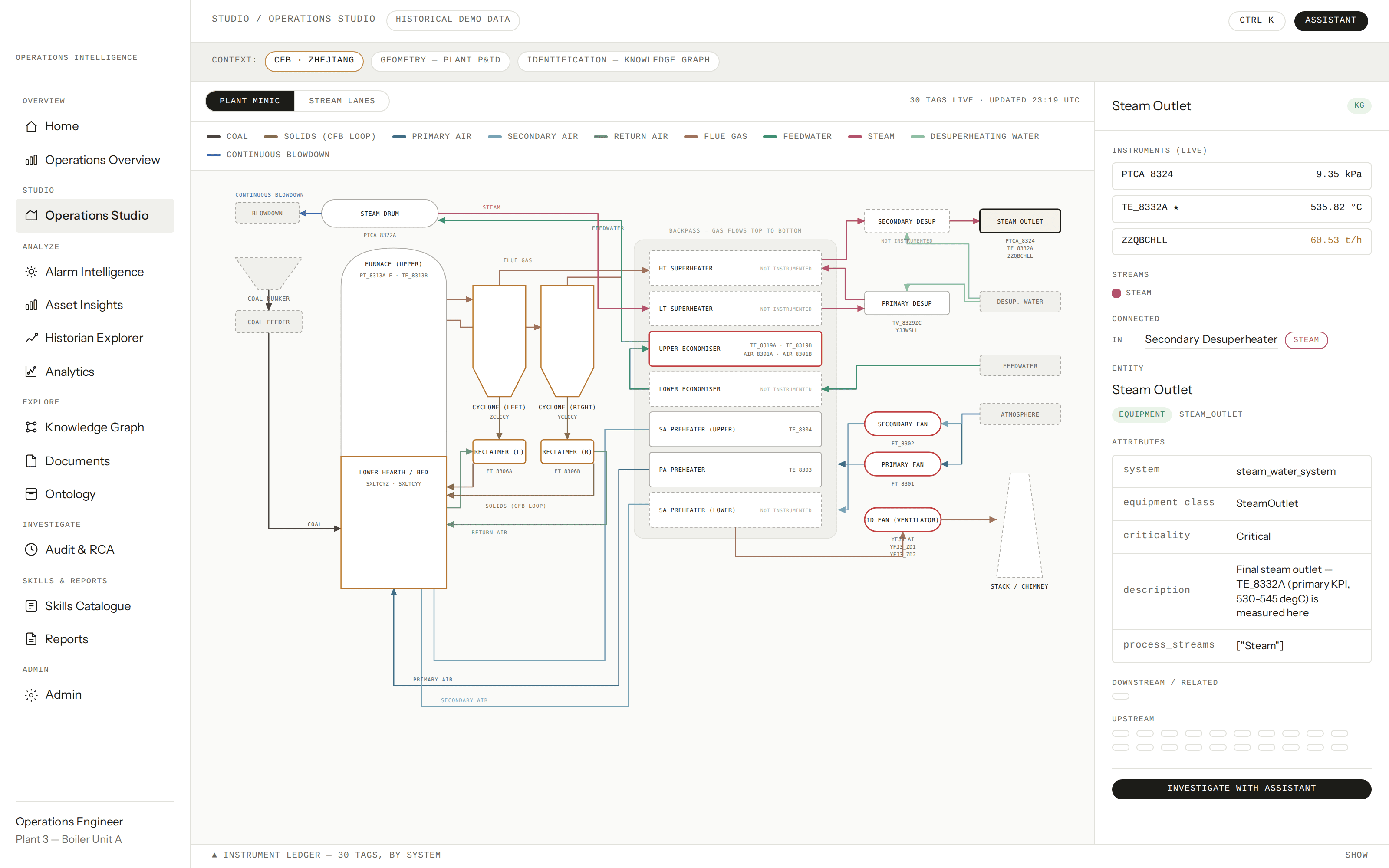
The plant as a live mimic diagram. Every stream, sensor and piece of equipment links to the knowledge graph and can be inspected with one click.
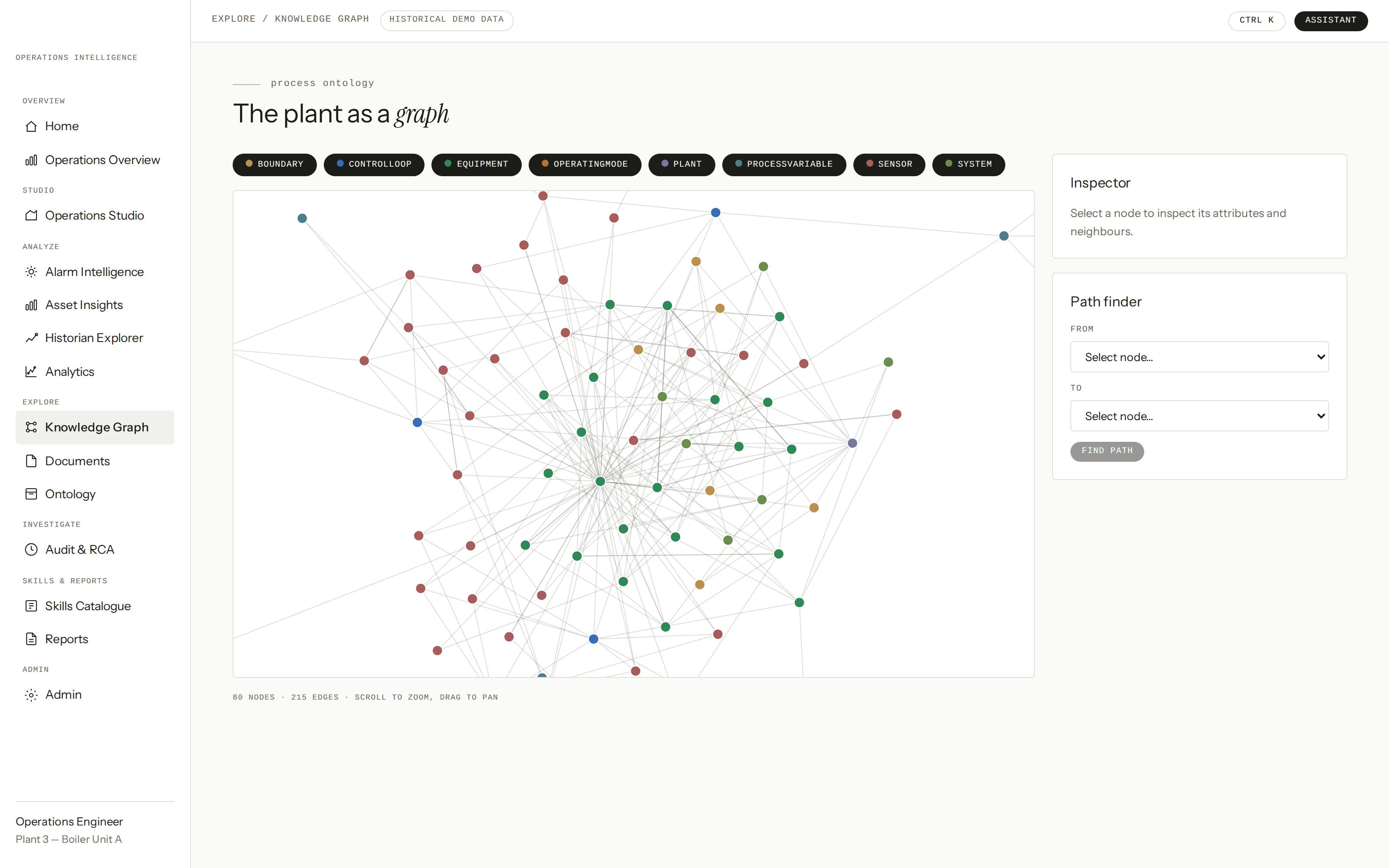
Process knowledge graph
Equipment, sensors, streams and control loops as a network you can query, so upstream causes and downstream effects are traced automatically.
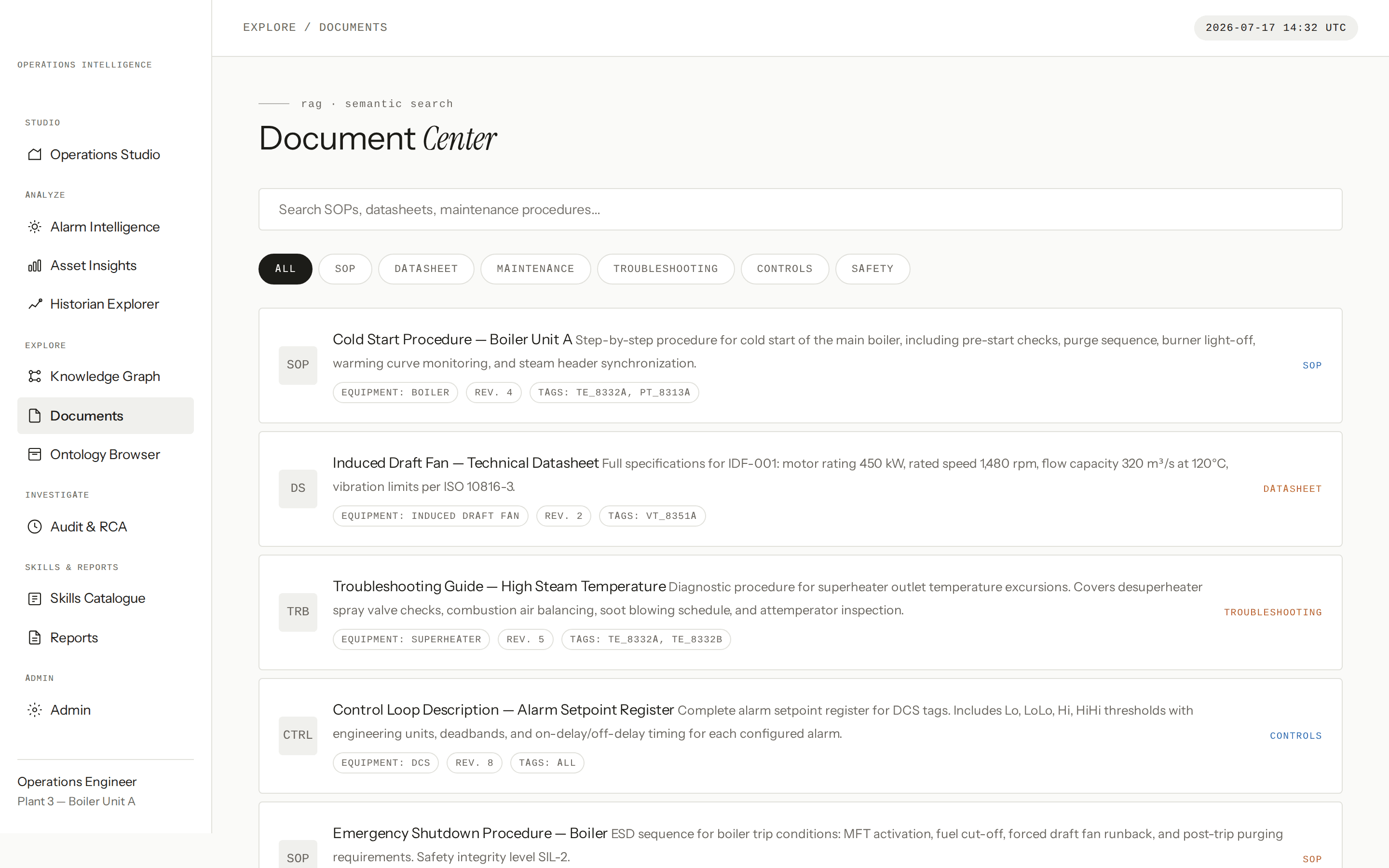
Engineering documents
SOPs, datasheets, and troubleshooting guides retrieved by meaning, always cited by document title and revision.
Built for the questions
operators actually ask.
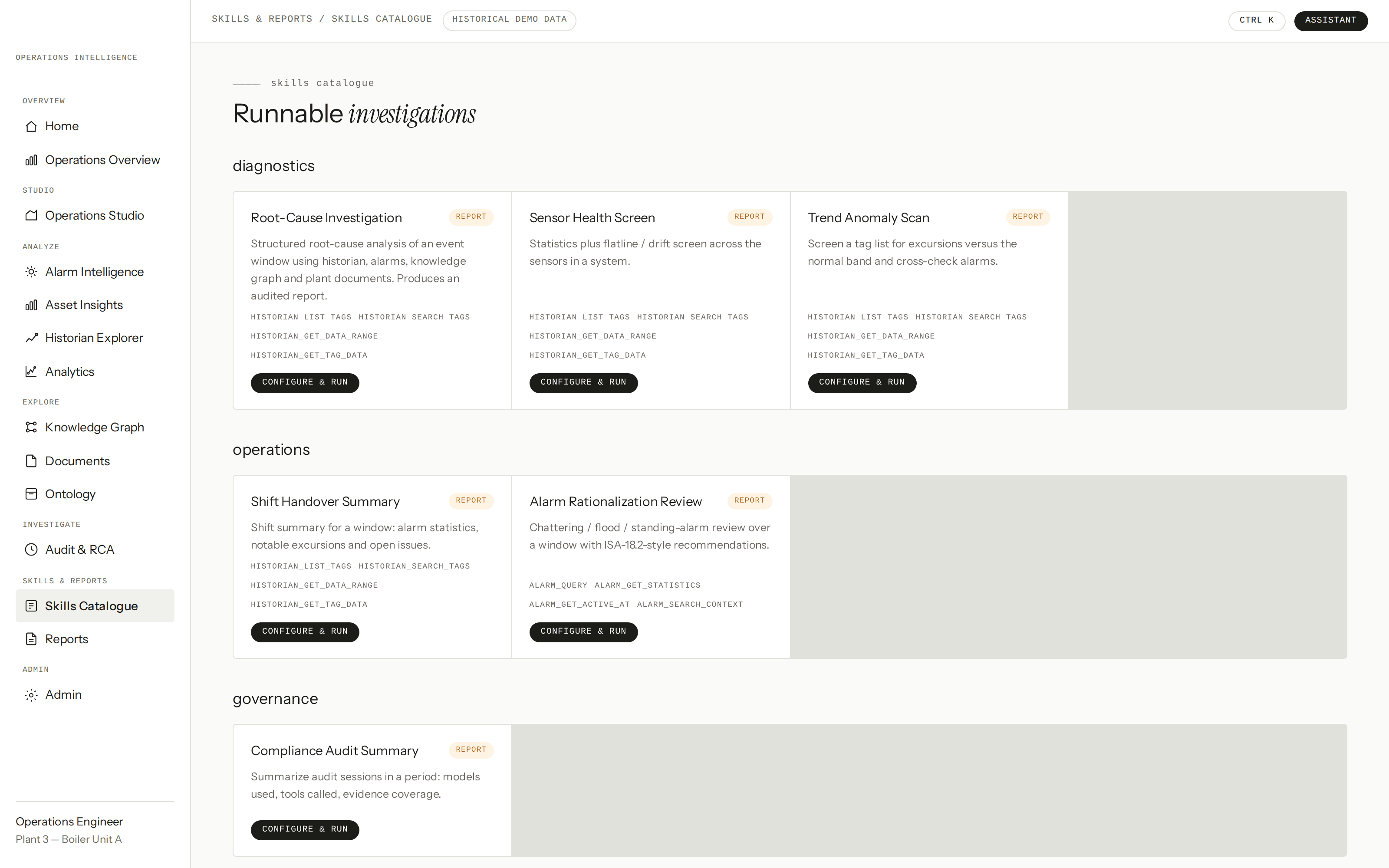
OpenFoundry ships with a growing catalogue of governed Skills — reusable, auditable agent capabilities designed to apply across manufacturing, energy and process, construction, and retail operations.
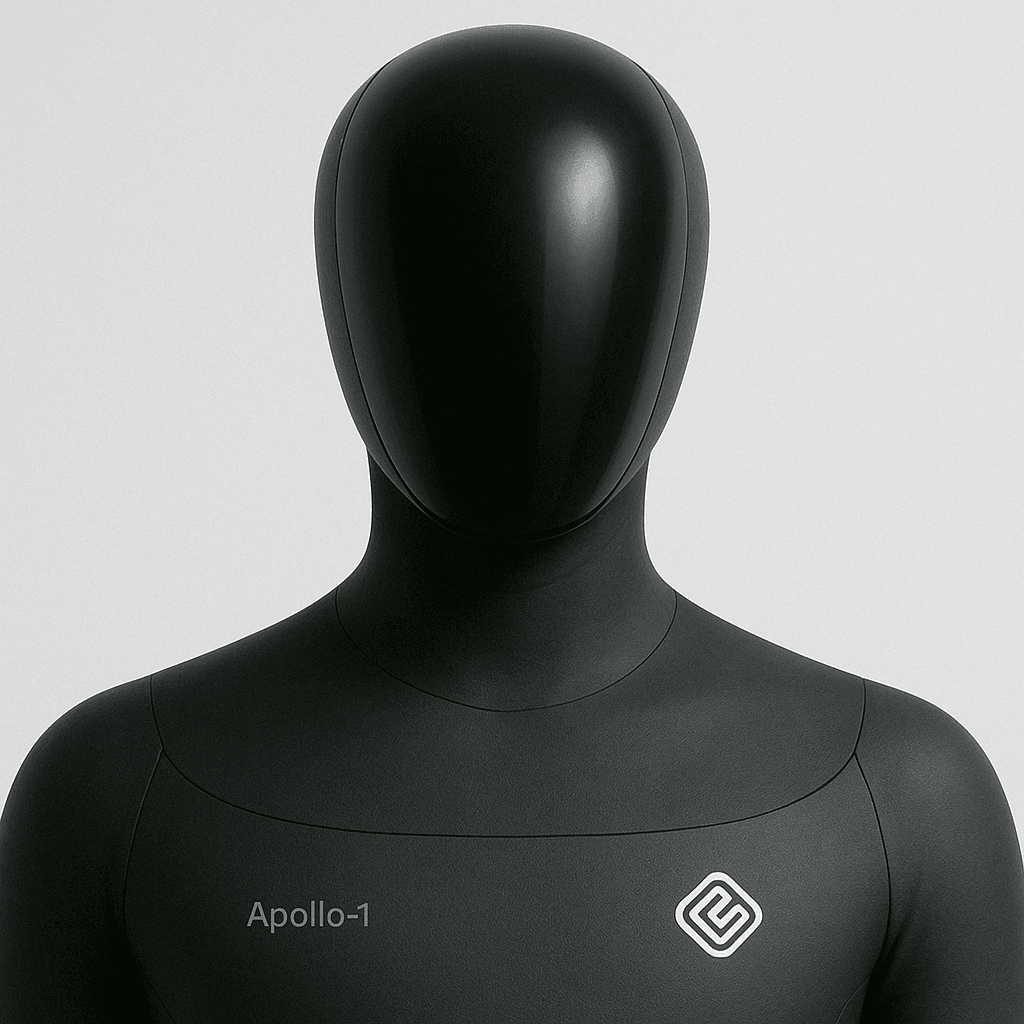
Apollo-1
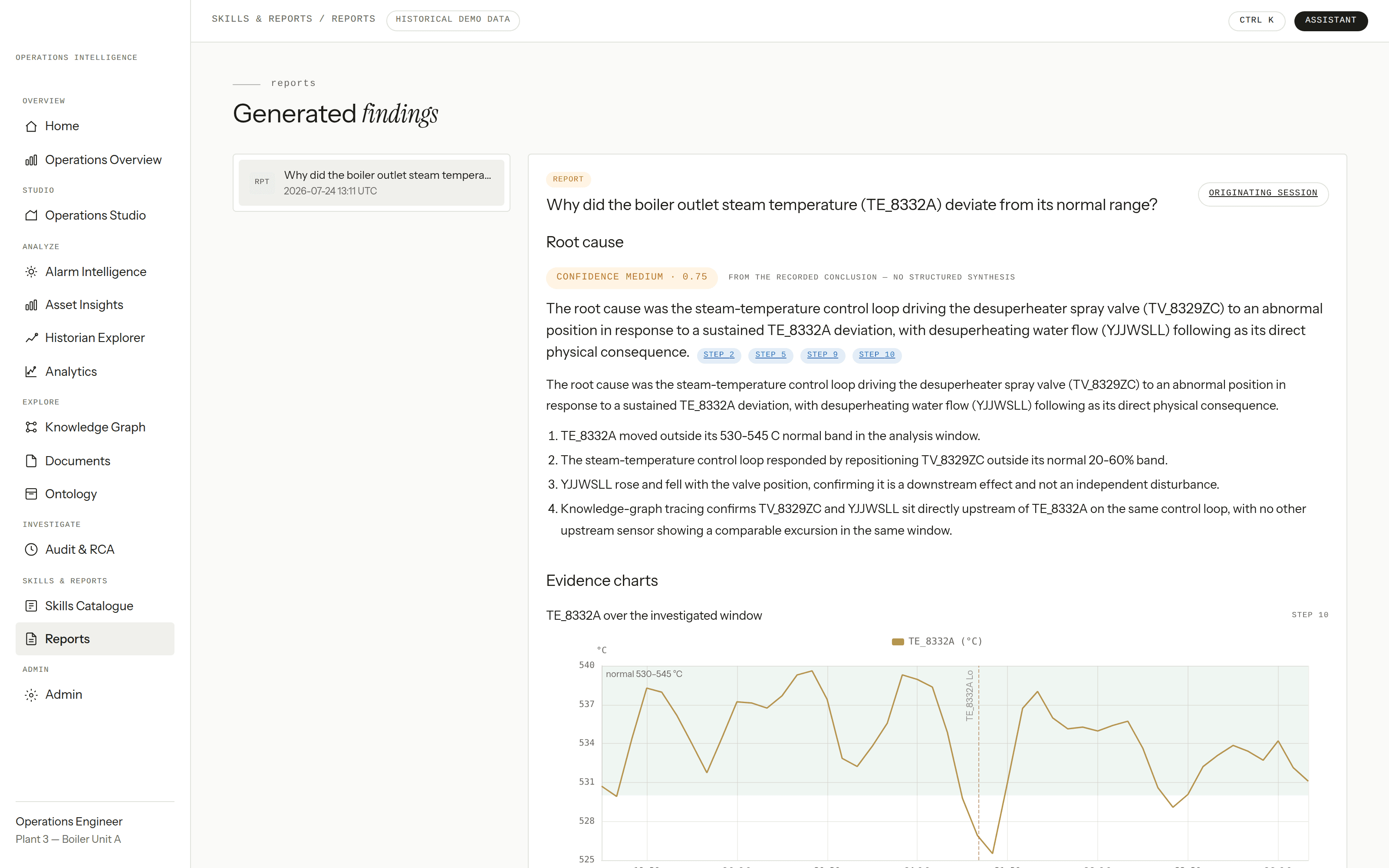
Apollo-1 is the main agent in OpenFoundry. It is built to work the way a senior process engineer would: form a hypothesis, gather evidence, rule out alternatives, and only then conclude.
Its reference deployment is a coal-fired boiler, where it investigates temperature and pressure excursions and traces the root cause across sensors, alarms and procedures.
Governance and audit
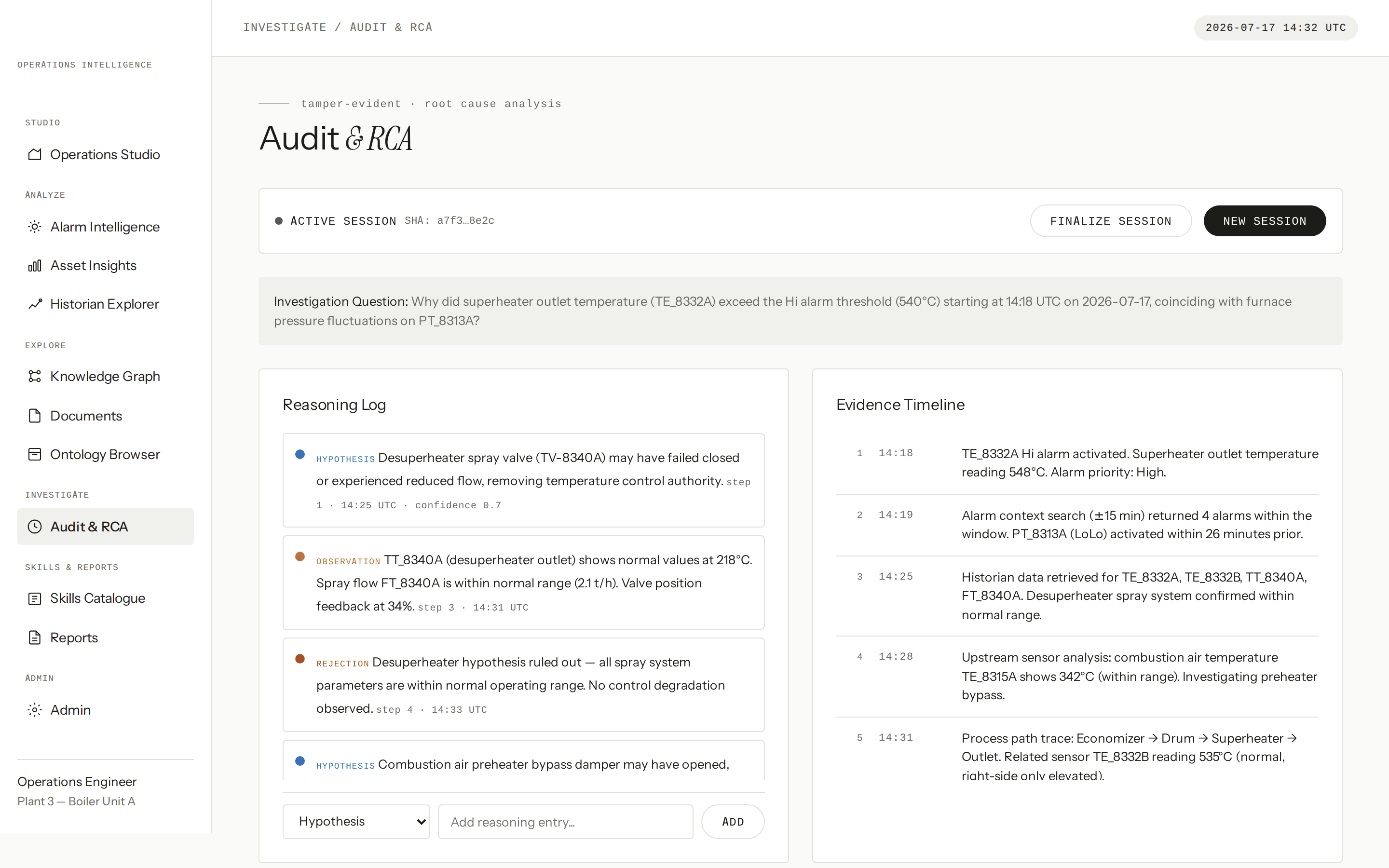
Changes to the ontology are checked against the schema before an agent sees them. Each investigation is saved in a tamper-evident record, so nobody can rewrite it afterwards.
Designed with the EU AI Act in mind
An AI system that advises on plant operations could fall into the EU AI Act's high-risk category. I used the Act's requirements for high-risk systems as design requirements for OpenFoundry, and I think they made it a better system regardless of the law.
This is a design choice, not a compliance claim. Conformity can only be assessed for a specific deployment, and OpenFoundry isn't on the market.
The operation as a graph
OpenFoundry keeps a graph of the operation: processes, systems, decisions, rules and data sources, connected and queryable as they change.
Want to see it run?
OpenFoundry is still a research project. I'm happy to walk researchers and operations teams through it.