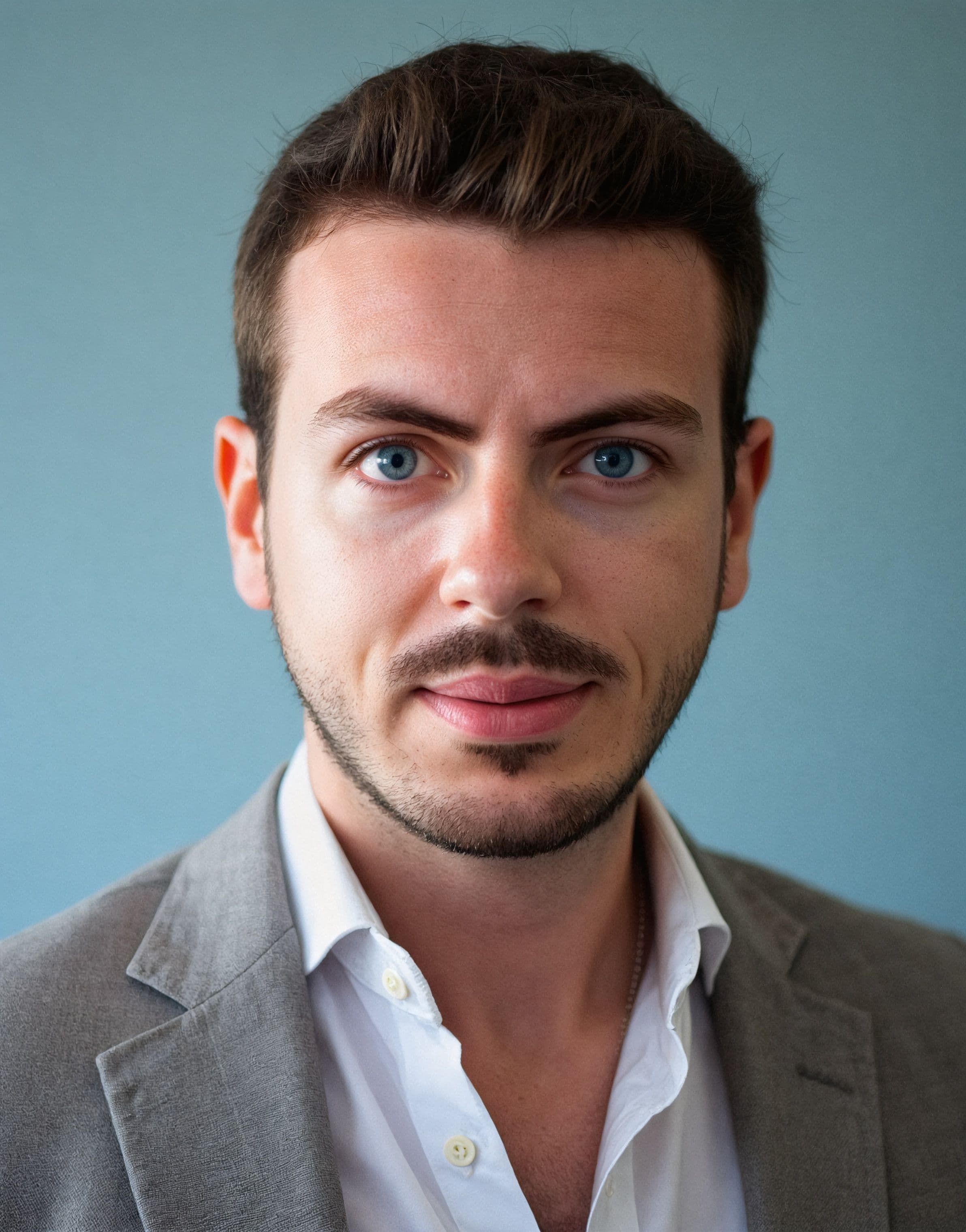
About me
I started as an operations consultant at Kaizen Institute and went on to run its digital transformation consulting practice. Since 2025 I've been Director of Growth, Marketing & Sales at Kaizen Tech, an Industry 5.0 software company, and I teach Industry 5.0 at Porto Business School.
Alongside that I research how AI should work in operations: knowledge graphs, how agents and people share decisions, and what an AI system needs to know about a plant before its answers can be checked.
What I work on
Industry 5.0
People and AI in industrial work
Industry 5.0 reframes the goals of industrial transformation — from pure efficiency and automation to a model where technology serves human capabilities, builds organisational resilience, and supports sustainable operations at enterprise scale.
02Knowledge Graphs for Enterprises
From data to context. From context to reasoning.
Most enterprise AI underperforms because the knowledge it needs is missing. Rules, constraints and working knowledge sit in documents, systems and people's heads, where an AI system can't reach them when a decision comes up.
03Next-Generation Operations Systems
Plants where machines, software and people work as one system
Operations systems are being redesigned, and adding AI to existing workflows only gets you so far. I'm interested in systems where the process, the software and human judgement are designed together, with clear handoffs between them and governance built in from the start.
Papers and essays
3 published · 4 in progress
Robotic Process Automation: A Qualitative Journey Through RPA's Impacts on Company Employees
Thirteen interviews across four multinationals on what RPA does to the people who work around it. The effect depends on whether the company automated individual tasks or whole processes.
File-Based Knowledge Graphs and Retrieval-Augmented AI for Complex Project Delivery
A design pattern for knowledge graphs stored as structured files instead of a graph database, built and tested on a multi-year, multi-site MES implementation.
Beyond Speech-to-Text: Preserving Meaning in Clinical Transcription
Treating AI clinical transcription as a meaning-preservation problem rather than a speech-recognition one: what has to survive dictation, a human-in-the-loop workflow that keeps release authority with the physician, and an honest account of what is designed versus what is proven.
Reconfigurable Smart Production System for Prefabricated Panelised Construction
A reconfigurable production architecture for panelised construction that holds design intent, fabrication sequence, and site assembly coherent across variant design spaces.
Ontology Alignment Patterns for Manufacturing ERP Integration
Practical patterns for mapping ERP data structures onto a domain ontology when a full schema migration is off the table.
Independent research project
OpenFoundry, where I test the ideas in code
OpenFoundry is a platform I built to answer one question: what does the data and knowledge underneath an AI agent have to look like before it can be trusted with an operational decision? It turns historian data, documents, procedures and plant concepts into one governed model that the agent reasons over. Ask it why, and it shows you the reading, alarm or procedure it used.
See how it works →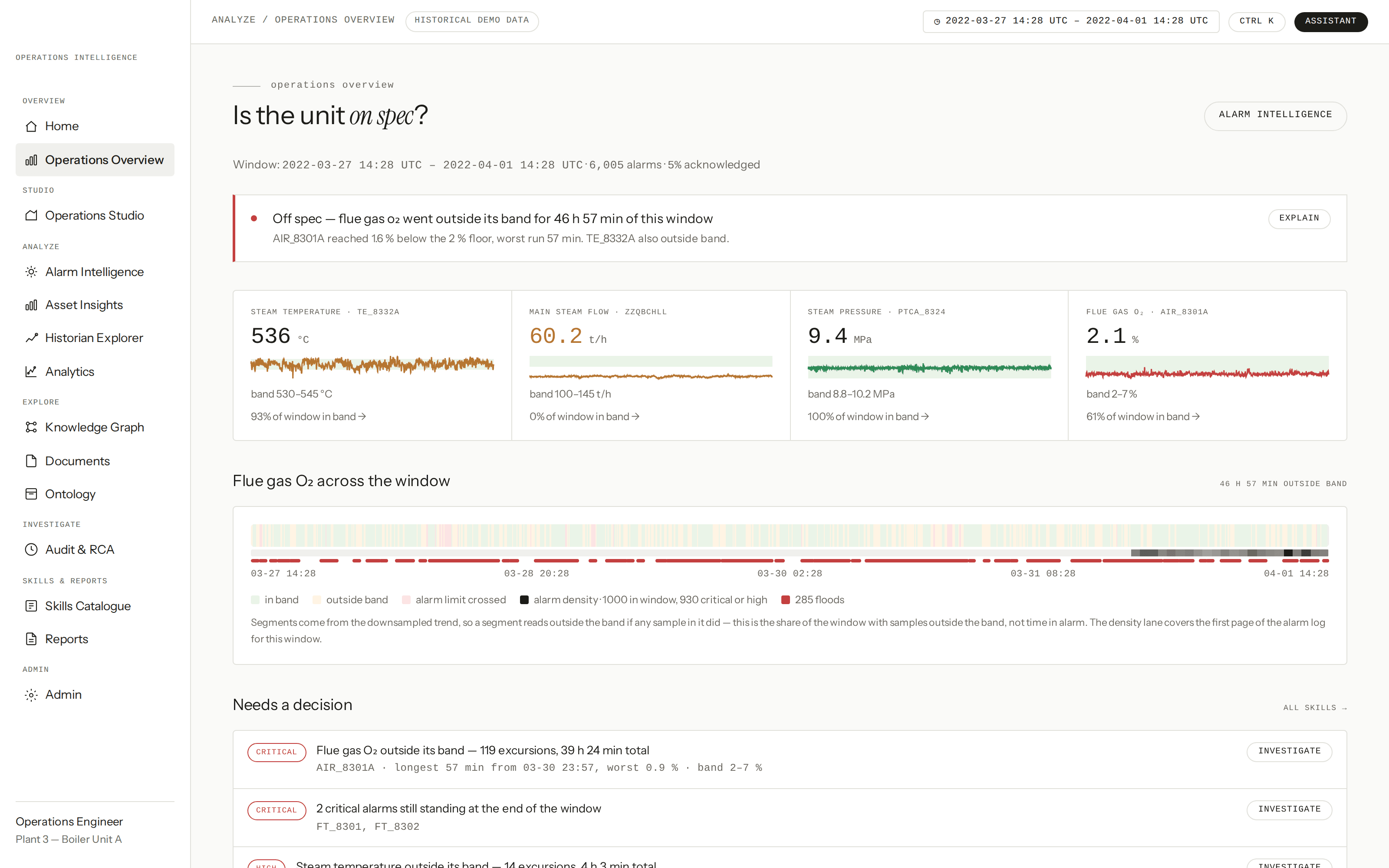
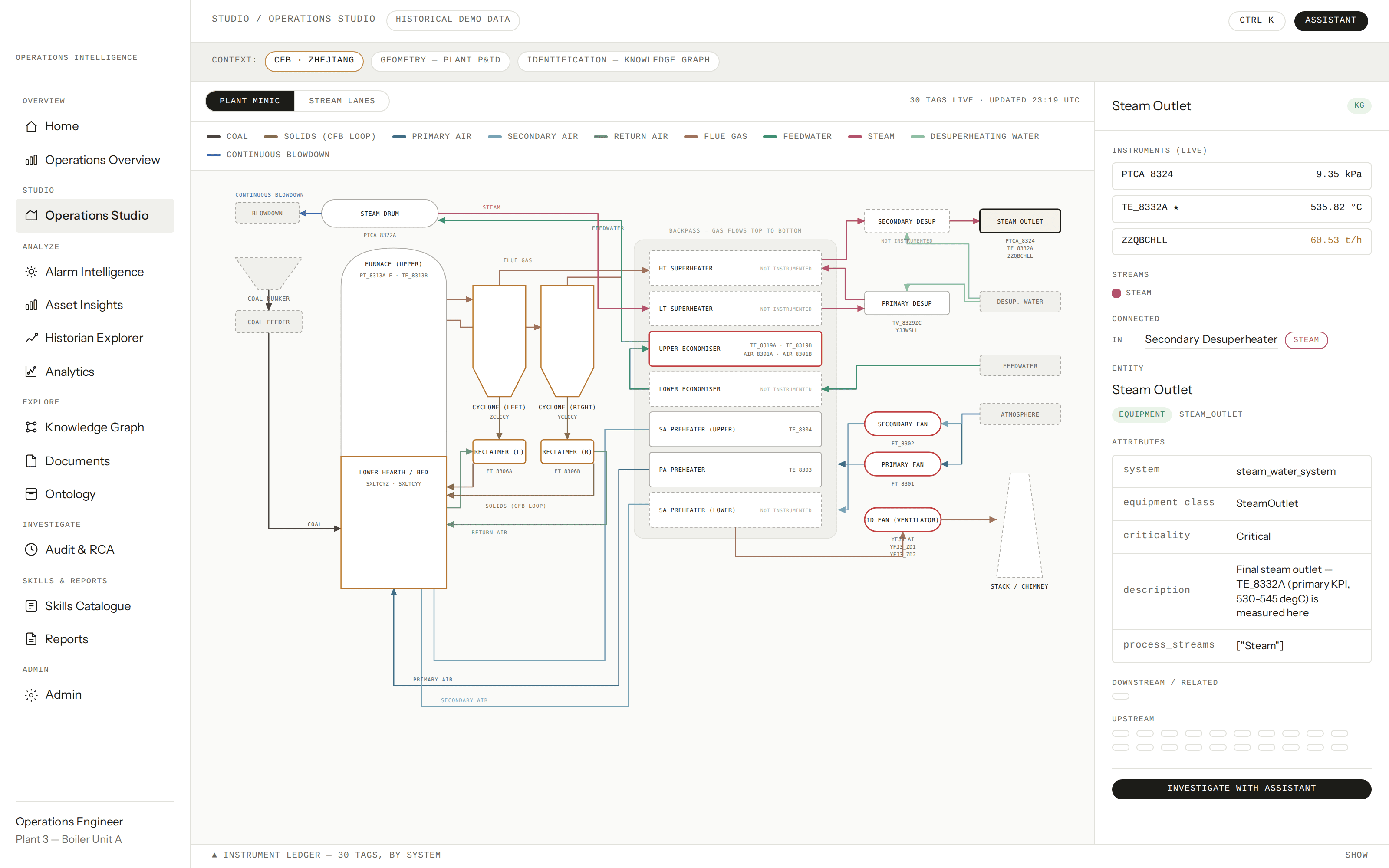
Apollo-1
Apollo-1 is the agent I built inside OpenFoundry to test the architecture. Its reference deployment is a coal-fired boiler, where it investigates anomalies and traces the root cause across sensors, alarms and procedures, keeping a record of each step.
Personal concept · public sources only
The next surge doesn’t have to start cold.
Everwarm is a readiness platform that makes Europe’s civilian industrial capacity visible in peacetime, so it can be activated when a requirement arrives. It sits above NATO’s factory registry. The film shows how, in seven minutes.